
Lessons Learned vs Retrospective (The Differences)
As a startup that develops software for team development and retrospectives, we are often confronted with interesting definitions of retrospectives - for example “ Aren’t reviews and retrospectives the same thing? %E2%80%9D. Um, no.
That’s why you can find our definition here: What is a Retrospective?
A legitimate question, on the other hand, is that of “ Lessons learned workshops ” and whether these are a synonym for retrospectives. Here, the answer is a bit more difficult.
Lessons Learned vs. Retrospective
Differences Lessons Learned & Retrospective
What connects both formats: It is about reflecting on past events in order to learn from them and, if possible, derive measures from them.
Lessons Learned Workshops: Here one reflects focused on a frame of reference such as a project or a go-live. Lessons learned workshops are therefore one-off events.
Retrospectives: Here, on the other hand, the frame of reference is the general cooperation in the team. The format is established as a regular routine in the team. The goal is to capture all impressions and ideas of the team members. Therefore, as a rule, retrospectives are not given a restrictive focus on a single topic.
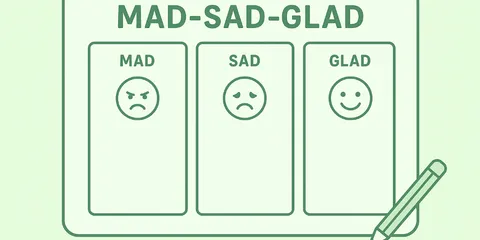
On the contrary, they try to stimulate the teams’ reflection, namely with open questions, often asked metaphorically. Here are some examples: 54 different retro formats .
| Lessons Learned Workshop | Retrospective | |
|---|---|---|
| Focus | A concrete event (e.g. project completion, or go-live) | Continuous improvement of cooperation |
| participants | Team members and ideally also stakeholders | Usually only the team itself |
| termination | One-time / occasion-related | Recurring routine |

"Many team members are afraid to speak up!"
Solve this challenge
"We discover too many unexpected issues & bugs at a late stage!"
Solve this challenge
"Why does it sometimes take me hours to prepare a simple retrospective?"
Solve this challengeWhen Do You Use a Lessons Learned Workshop and When Do You Use a Retrospective?
Occasion-related Lessons Learned Workshops at Events
A Lessons Learned Workshop is therefore used for special events such as the completion of a project, an event or a go-live.
In such a Lessons Learned workshop, questions are asked such as:
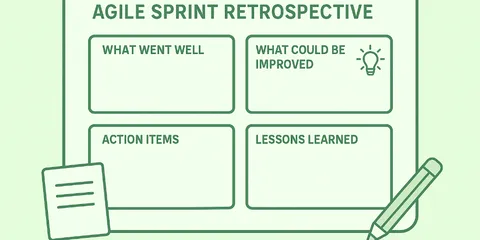
- What went well in the project, what didn’t go so well?
- What would we do differently for the next project?
After that, however, the project team may split up. In this respect, the questions also serve as a quality measure and quasi-psychological project conclusion. Everyone can give final feedback before diving into new topics.
Retrospectives as a Continuous Routine
A retrospective, on the other hand, is used as a recurring routine for the continuous development of teamwork.
The retrospective takes place in a weekly to monthly rhythm. Agile Scrum teams in particular use retrospectives at the end of each of their sprints. (Read more: Retrospective in Scrum .)
However, the trend is (rightly) emerging that retros are also used in other contexts (agile HR management, agile sales etc.) - because they can provide great added value in any team that wants to improve.
Conclusion: Retrospectives & Lessons Learned Are Almost the Same
Lessons Learned Workshops are one-off formats and retrospectives are a continuous format.
In terms of agenda and procedure, the two meeting formats are very similar.
While retrospectives in agile teams often cover the need for separate lessons learned workshops, in less agile organizations lessons learned workshops are often one of the few ways to specifically reflect on the collaboration.
By the way, if you are still looking for a suitable retro board (with 60+ agile retrospective formats), this post can help you: Comparing the 6 best retrospective boards
Credits: Amazing photo created by marymarkevich - www.freepik.com