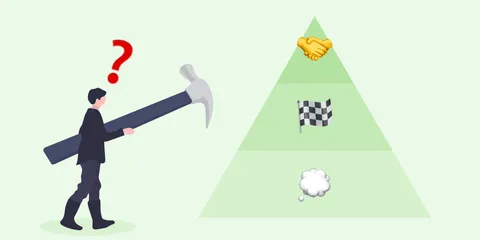

Fail fast & Learn fast - flourish as a company
“You don’t learn that fire is hot without touching it,” says the artist Sido in his song “Bad Role Model”. As simple as this statement sounds, there is a lot behind it. Some things are just learned the hard way, and that applies to companies as well. However, there are ways and means of keeping damage low and getting the most out of your mistakes.
What does “fail fast learn fast” mean
Gifts work best when they surprise you. So you think about it, do research, go shopping and then face the recipient with a happy smile. But then comes the disappointment: You have misjudged the person or he has meanwhile bought what you wanted to give her.
Fortunately, companies work differently than a birthday. Clients and employees do not have to be surprised, but should be involved in development or change processes. It should Mistakes are even welcome . The sooner they are recognized, the better. “Fail fast learn fast” = fail quickly, but also learn quickly.

How to live after “fail fast learn fast”
New ideas should go into the test phase as soon as possible. So you don’t lose a lot of time developing if the end product was doomed to failure anyway.
There are several ways to get opinions early in development. If internal changes are involved, feedback can be requested from employees and initial approaches to ideas can be implemented in individual departments.
When external customers are involved, failure is usually even more reluctant. There are, however, various options for successfully practicing “fail fast learn fast”:
-
Get the opinion of the target group on social media: The target group still knows best whether products will be well received by customers
-
Kickstarter or Appinio: On these websites you can get feedback from various target groups with regard to ideas in a relatively short time, do market research for products and sometimes also gain financial support for your project.
-
MVP: The principle of the Minimal Viable Product allows you to test ideas with the least possible effort and consequences. Let’s go back to the year 2005, for example: If you wanted to bring a smartphone onto the market, you could test it without a pretty case and only with the basic functions of making calls and taking photos and introducing it to potential customers. At this point, a quick change of course is possible in the event of problems.
-
A few negative examples of “Fail fast learn fast”: Sometimes companies are too sure of themselves and only notice late that their products were not suitable for the market.
-
Burger King once brought out low-calorie fries called Satisfries in the past and quickly discovered that this diet snack was not well received by fast food lovers. After about a year, the fries were removed from most menus in the US and Canada.
-
Oakley combined sun + music and integrated an MP3 player into sunglasses when the necessary technology was not yet small enough. The result was a bulky pair of glasses that nobody really wanted to wear.
-
You can find even more product ideas that didn’t pay off here: Watson Artikel.
“Fail fast learn fast” - Conclusion
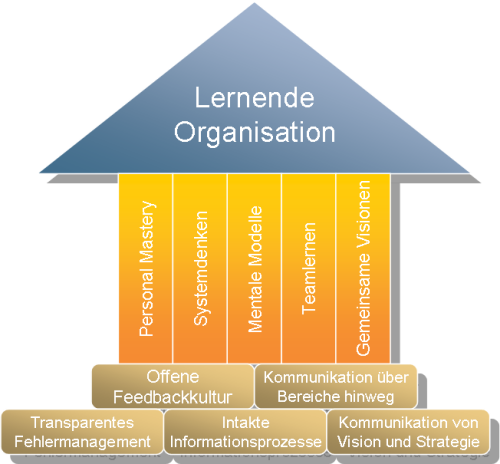
“Fail fast learn fast” is just one of the key words learning organizations heed. Companies must be in constant change to adapt to the demands of the market and the world of work. “Learn fast” can only be achieved through “fail fast”.
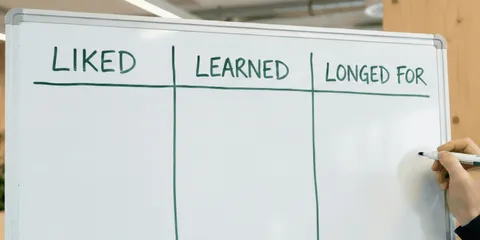
In order to absorb damage, ideas have to be tested in their basic stage and constantly Get feedback . One way to do this as part of change processes in the company is to do it regularly Retrospectives to carry out with his employees.
Our digital coach Echometer helps to carry out on-the-job leadership and personnel development and to continuously develop on the basis of psychological findings. We are already supporting the company Miele in making cultural change a measurable process. Watch a short documentation by Welt der Wunder about it here:
Agile transformation from MieleSources: