Trust in the team - with the team on cloud 7
When you talk to friends and acquaintances about what is particularly important to them in a relationship, many answer: trust. Trust refers to the subjective conviction that one can rely on something or someone to a high degree.
Interpersonal trust not only plays a major role in relationships or friendships, but also in professional cooperation this is an important factor for successful and effective cooperation. And not only that: trust represents a relevant one agile value represents.
Trust in the team and in the professional context
A large number of definitions exist for trust in the professional context, all of which describe similar facts.
Has relevance Albert Schweitzer formulated particularly clearly:
Trust is the big working capital for all companies, without which no useful work can do.
It creates the conditions for prosperous events in all areas.
If you read through several definitions, you will see that some aspects appear repeatedly and seem to have a high priority in work-oriented trust. The core elements of the definition of trust are always related to:
- The use of information that others provide
- Mutuality of action
- consciously taking the risk of being disappointed
- and the tension between trust and distrust.
Distrust and uncertainty arise where there is a high degree of control (Bierhoff, 2002), as this gradually undermines existing trust.
Is the end of control the beginning of loss of control?
On the contrary - the end of control is the beginning of trust in the team! According to studies, teams in which there is trust can record positive effects on cooperation. Employees communicate more and filter negative information less (cf. Schwer & Thies, 2003). Job satisfaction, motivation and performance increase with trust (cf. Neubauer, 1999) and cooperation and voluntary work engagement are promoted among the members (Bierhoff & Herner, 1999). You see: Strengthened trust between team members strengthens autonomous control and exchange, which leads to an increase in productivity and motivation.
How you can tell that you have trust in the team
A lack of trust in the team is characterized by the fact that employees do not exchange ideas and keep problems to themselves. You can find more information in our article on Shared knowledge, On suspicious corporate climate is also characterized by power games, competitive thinking, blaming and more or less hidden hostility. The latter phenomena can also be present subconsciously and therefore have an indirect negative impact on work processes.
Possible Echometer items (you don’t know what Echometer does? Then have a look right here!), with which you can get to know and reflect better on the trust relationship of your team, are:
- In conflicts, we talk on a factual level, so that no one feels personally attacked or judged.
- Identifying your own weaknesses is seen as a strength in our team.
- We value the achievements and contributions of our colleagues.
You can find these and many other items in our tool - test Echometer for free now!
A secure basis of trust is therefore noticeably reflected in the feedback culture of your team, as there is a secure space for the identification and targeted processing of weaknesses. In trusting teams there is no fear of being judged and further development processes are encouraged by the direct question of support.
Trust in the team - tips for practice
A good start for building trust in your team would be to start your next retro (you don’t know what a retro is? FAQs according to!) each name one of your weaknesses. The person who speaks next gives a tip for dealing with this weakness and praises the openness before continuing with his or her own weakness.
Surely you think now: We are not a self-help group? And yes, it’s true: you are not. But we all are reluctant to admit weaknesses and speaking out and commenting openly ensures that you jump over your shadow and build personal relationships with each other.
So it’s best to start right now, because the way is the destination, as is well known!
How can we help?
At Echometer, we are committed to transforming TeamWork and promoting it in the long term. With the help of psychological know-how and ours Team retrospective tool we have developed for teams like your optimally tailored items that ensure that trust will soon form the basis of your cooperation.
References
- Schuler, H. (2007). Manual of industrial and organizational psychology. Handbook of Psychology: Vol. 6. Göttingen: Hogrefe.
-
Die 5 Grundregeln des Vertrauens karrierebibel.de Vertrauen ist die Basis jeder Beziehung. ✅ Aber wie gewinnt man Vertrauen? Tipps, wie Sie vertrauenswürdiger werden...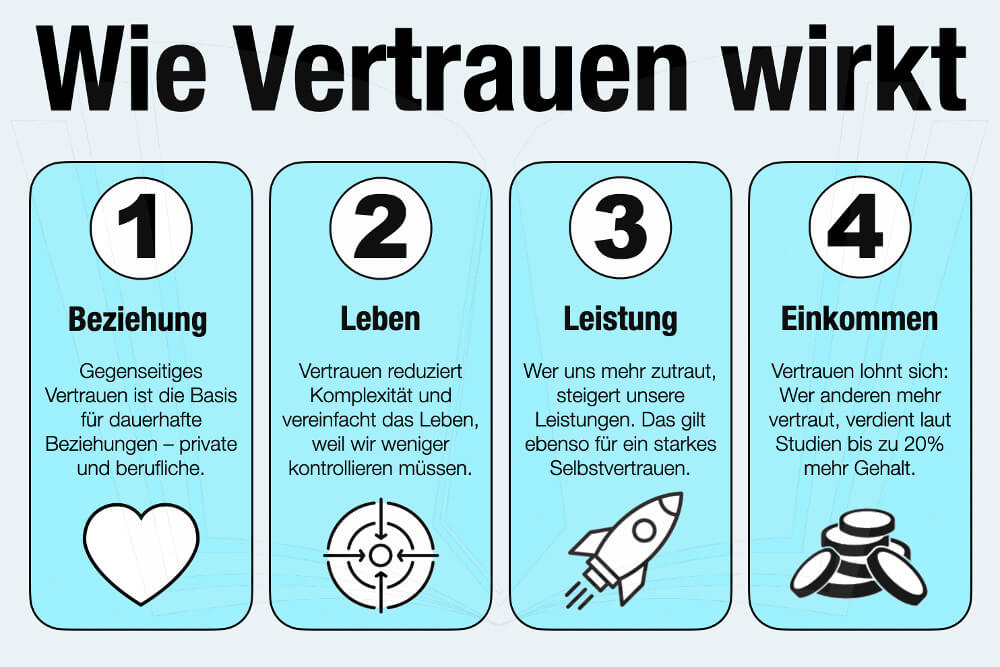
-
Zitat von Albert Schweitzer gutzitiert.de Zitat von Albert Schweitzer: Vertrauen ist für alle Unternehmungen das große Betriebskapital, - Zitate, Sprüche und Aphorismen.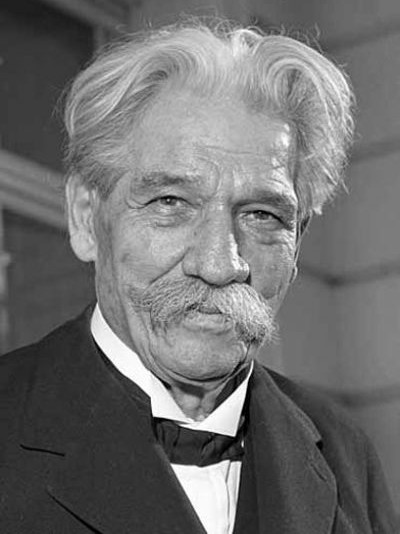
-
Vertrauen values-academy.de Was ist Vertrauen? Definition und Bedeutung, inklusive ausführliche Beschreibung, etymologische Herkunft des Wortes, Zitate und Videotipps.