
Team problems and what to do from a psychological point of view
Working in teams has many advantages: more agile action , create more sense of belonging and more in a short time. However, anyone reading this will likely come up with at least one experience of their own where exactly the opposite was the case.
Team problems often consist in the fact that the members obstruct each other. Can you recognize your work team in the following?
Everyone on the same strand … but wrong
Cohesion is very important in a team, but good teamwork in a productive work environment should involve much more. It happens all too easily that individual team members join the majority even though they actually hold a different opinion. They do not value their own expertise enough and avoid conflicts. Then the team gets into trouble and it can mean lost opportunities.
For example, the developer of an app does not speak up when drawing up the marketing plan because he thinks he does not understand anything. In reality, however, he knows much better about the practical uses of the app.
So it is important to encourage team members to share their view of things, even if this is not strongly represented. The best way to avoid such team problems is to introduce rules and methods in which all points of view can be examined.

Note:Ever heard of the Hidden Profile Paradigm? In psychological studies it turned out that in group decisions mostly only the information is used known to all participants are. What is only known to individuals, on the other hand, is not shared. This is because knowing what many have meets with more approval, even if it doesn’t reflect the whole picture.
Good cohesion or good teamwork
As a social animal, humans have a need for recognition and belonging in their social environment. Meetings should be fun and colleagues should get along well, no question, but can this also lead to team problems? Yes, if the relationship with each other is placed above solving problems or conflicts…
No one can work properly if one is vulnerable harmony does not want to endanger the group. Good moderation during meetings can help.
Discussions should be conducted in a task-related manner, while common breaks should be reserved for personal exchange.
Need a little help? This video contains valuable tips for effective meeting moderation:
Team problems caused by “the other”
Good teamwork should also mean that everyone really lends a hand. However, a look at the performance of employees can also have a very demotivating effect. To illustrate, here are a few effects that psychology has observed that can cause problems for a team:
- Social loafing: Performance is unconsciously reduced in simple tasks in the group when individual performance is not visible or evaluated.
- Free riding: Performance is deliberately reduced if one’s own contribution is considered too small. The larger the group, the greater this effect.
- Sucker effect: Performance is deliberately reduced when you notice that others are not making an effort. You no longer want to be “the fool” who takes work away from others.
- Soldiering: Performance is deliberately reduced as a protest against excessive demands.
Are these team problems inevitable?
Yes, it would be a lie if I said there was a solution for everything. We are human and we make mistakes or get into each other. But let’s see it on the bright side, none of these team problems would mean the downfall of a company, but they can extremely degrade performance.
So how do you make sure that everyone is properly involved in discussions and doing their best? As already mentioned, it is important to create structures in which the Team members feel comfortable . You should regularly exchange information about whether the cooperation as it is currently going on is still productive.
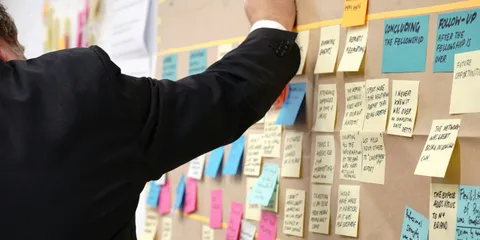
One easy way to do this is by using regular ones Team retrospectives. For example, the following statements should apply to your team if you have overcome the above team problems:
- In my team, every team member passes on their individual knowledge and experience.
- Our meetings are well structured and still leave room for creativity and new things.
- In our team you can have different opinions and still work together successfully.
- It is easy for me to address difficult or controversial topics in my team.
- My contribution is a real added value for my team.
Incidentally, these are all behavioral anchors of the digital coach Echometer, who helps to further develop teams in a targeted manner from a psychological point of view.
This was only a small part of ours Tool with which your team can overcome problems and make successes visible can. If you are interested in the effects Echometer has, please feel free to contact the Experience report View from Shopware AG:
Shopware experience reportTeam Problems - Sources:
Nerdinger, FW, Blickle, G., & Schaper, N. (2014). Industrial and organizational psychology. Berlin, Heidelberg: Springer Berlin Heidelberg. https://doi.org/10.1007/978-3-642-41130-4
Aronson, E., Wilson, TD, & Akert, RM (2014). Social psychology (8th, updated edition). Always learning. Hallbergmoos: Pearson. http://lib.myilibrary.com?id=652729
Parker, GM (1990). Team players and teamwork. San Francisco: Jossey Bass. http://citeseerx.ist.psu.edu/viewdoc/download?doi=10.1.1.458.1302
Stasser, G., & Titus, W. (1985). Pooling of unshared information in group decision making: Biased information sampling during discussion. Journal of Personality and Social Psychology, 48, 1467–1478. https://www.uni-muenster.de/imperia/md/content/psyifp/
Wegge, J. (2004). Leadership of working groups. Göttingen: Hogrefe. https://books.google.de/books?hl=de&lr=&id=IHhI_yeOXrEC&oi=fnd&pg=PR5&dq=Wegge