
4 fun retrospective techniques: How to spice up team meetings.
In the agile world, retrospectives are an essential tool for learning from experience and continuously improving.
But let’s be honest: sometimes these meetings can be monotonous and uninspiring. So how can we make these important meetings more interesting and dynamic?
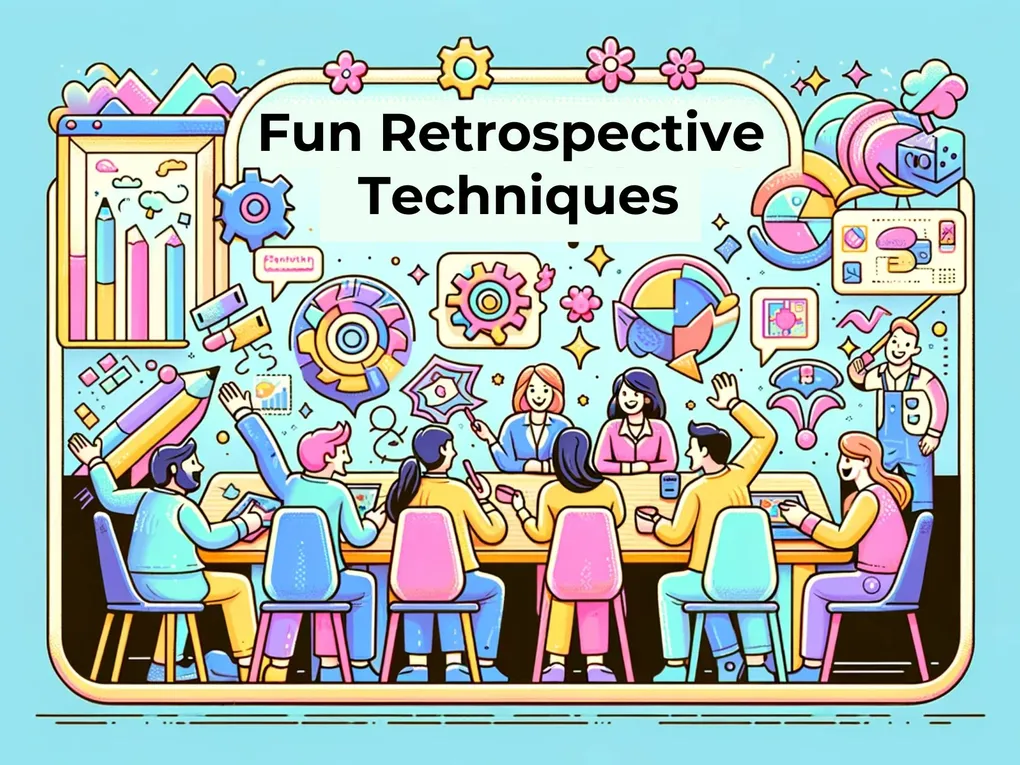
In this article, I present some creative and fun retrospective techniques that will liven up your retro.
Fun retrospective techniques
Creative and fun retrospective techniques 💡
As previously mentioned, having fun with retrospectives is a very important quality.
After more than 6 years on the market and thousands of teams who have conducted retrospectives with us, we can say one thing clearly: fun increases engagement. This in turn leads to more productive retrospectives and ensures the continuous improvement process.
Or to put it simply: leading a strong agile team is not a sprint but an endurance discipline. And you get further with pleasure.
In an attempt to make retrospectives fun, a variety of ways of holding retrospectives have emerged and accordingly there are also many fun retrospective techniques. Here are 4 fun approaches to retros that you’ve probably never seen before:
1. Retrospective Speed Dating ❤️
Organize short, one-to-one conversations within the team, similar to speed dating. Each pair discusses specific questions or topics for a few minutes before moving on to the next partner. This encourages direct communication and helps team members to understand each other better. The “First Date Retrospetive” also fits the occasion:
First Date Retro: How the retro works
-
Random Icebreaker (2-5 minutes)
Echometer provides you with a generator for random check-in questions.
-
Review of open actions (2-5 minutes)
Before starting with new topics, you should talk about what has become of the measures from past retrospectives to check their effectiveness. Echometer automatically lists all open action items from past retros.
-
Discuss retro topics
Use the following open questions to collect your most important findings. First, everyone does it themselves, covered. Echometer allows you to reveal each column of the retro board individually in order to then present and group the feedback.
- What would make you fall in love with the team?
- What are common values that you are searching for?
- What would be red flags that are bad signals for a healthy relationship?
- What would the dream future look like?
-
Catch-all question (Recommended)
So that other topics also have a place:
- What else would you like to talk about in the retro?
-
Prioritization / Voting (5 minutes)
On the retro board in Echometer, you can easily prioritize the feedback with voting. The voting is of course anonymous.
-
Define actions (10-20 minutes)
You can create a linked action via the plus symbol on a feedback. Not sure which measure would be the right one? Then open a whiteboard on the topic via the plus symbol instead to brainstorm root causes and possible measures.
-
Checkout / Closing (5 minutes)
Echometer enables you to collect anonymous feedback from the team on how helpful the retro was. This creates the ROTI score ("Return On Time Invested"), which you can track over time.
First Date Retro

Fun retrospective techniques
2. Retrospective Games 🎲👻
In addition to retrospectives, we also love all games. That’s why we have the best of both worlds here. A retro game like Pacman (pun intended):
Pacman Retro 🟡: How the retro works
-
Random Icebreaker (2-5 minutes)
Echometer provides you with a generator for random check-in questions.
-
Review of open actions (2-5 minutes)
Before starting with new topics, you should talk about what has become of the measures from past retrospectives to check their effectiveness. Echometer automatically lists all open action items from past retros.
-
Discuss retro topics
Use the following open questions to collect your most important findings. First, everyone does it themselves, covered. Echometer allows you to reveal each column of the retro board individually in order to then present and group the feedback.
- What ghosts were hunting you in the last sprint?
- What allowed us to turn from hunted to hunter?
- What new tactics might lead us to winning in the future?
-
Catch-all question (Recommended)
So that other topics also have a place:
- What else would you like to talk about in the retro?
-
Prioritization / Voting (5 minutes)
On the retro board in Echometer, you can easily prioritize the feedback with voting. The voting is of course anonymous.
-
Define actions (10-20 minutes)
You can create a linked action via the plus symbol on a feedback. Not sure which measure would be the right one? Then open a whiteboard on the topic via the plus symbol instead to brainstorm root causes and possible measures.
-
Checkout / Closing (5 minutes)
Echometer enables you to collect anonymous feedback from the team on how helpful the retro was. This creates the ROTI score ("Return On Time Invested"), which you can track over time.
Pacman Retro 🟡

Fun retrospective techniques
3. retrospective storytelling 📕 📗 📘 📙 📙
Ask team members to tell stories about their experiences in the last sprint. This can be an effective method for shedding light on complex problems and promoting creative solutions. There is also a suitable retro format here: “The Storytelling Retro”:
Book Retro: How the retro works
-
Random Icebreaker (2-5 minutes)
Echometer provides you with a generator for random check-in questions.
-
Review of open actions (2-5 minutes)
Before starting with new topics, you should talk about what has become of the measures from past retrospectives to check their effectiveness. Echometer automatically lists all open action items from past retros.
-
Discuss retro topics
Use the following open questions to collect your most important findings. First, everyone does it themselves, covered. Echometer allows you to reveal each column of the retro board individually in order to then present and group the feedback.
- If the last sprint was a book, which genre was it?
- What were the happiest moments of our protagonist?
- What made your book dramatic?
- What is necessary for the positive plot-twist you desperately wish for?
-
Catch-all question (Recommended)
So that other topics also have a place:
- What else would you like to talk about in the retro?
-
Prioritization / Voting (5 minutes)
On the retro board in Echometer, you can easily prioritize the feedback with voting. The voting is of course anonymous.
-
Define actions (10-20 minutes)
You can create a linked action via the plus symbol on a feedback. Not sure which measure would be the right one? Then open a whiteboard on the topic via the plus symbol instead to brainstorm root causes and possible measures.
-
Checkout / Closing (5 minutes)
Echometer enables you to collect anonymous feedback from the team on how helpful the retro was. This creates the ROTI score ("Return On Time Invested"), which you can track over time.
Book Retro

Fun retrospective techniques
4. The Retrospective Time Travel ⌛️ ⏳
Imagine you could turn back time. Where would your journey take you then? Retro time travel:
Time Travel Retro: How the retro works
-
Random Icebreaker (2-5 minutes)
Echometer provides you with a generator for random check-in questions.
-
Review of open actions (2-5 minutes)
Before starting with new topics, you should talk about what has become of the measures from past retrospectives to check their effectiveness. Echometer automatically lists all open action items from past retros.
-
Discuss retro topics
Use the following open questions to collect your most important findings. First, everyone does it themselves, covered. Echometer allows you to reveal each column of the retro board individually in order to then present and group the feedback.
- To which point in time (of your sprint) would you travel back to prevent a recent setback or failure of your team?
- To which point in time (of your sprint) would you travel back to experience it again, because it simply felt good?
- What point in the future would you travel to in order to learn something we don't know yet?
- What did we do differently to get to that point?
-
Catch-all question (Recommended)
So that other topics also have a place:
- What else would you like to talk about in the retro?
-
Prioritization / Voting (5 minutes)
On the retro board in Echometer, you can easily prioritize the feedback with voting. The voting is of course anonymous.
-
Define actions (10-20 minutes)
You can create a linked action via the plus symbol on a feedback. Not sure which measure would be the right one? Then open a whiteboard on the topic via the plus symbol instead to brainstorm root causes and possible measures.
-
Checkout / Closing (5 minutes)
Echometer enables you to collect anonymous feedback from the team on how helpful the retro was. This creates the ROTI score ("Return On Time Invested"), which you can track over time.
Time Travel Retro

Of course, we have many more templates up our sleeve. Try them out by testing our tool or have a look at this article: 26 Refreshing Agile Retrospective Templates
Fun retrospective techniques
Conclusion - Fun Retro Templates 👇
I hope that these techniques will help you to make your retrospectives more exciting and effective. Experiment with different approaches and find out what works best for your team.
Alternatively, you can also browse our retro library directly and try out exciting retro games live: