Agile Spotify Model: Squads, Tribes, Chapters & Guilds Explained
What is the Spotify model?
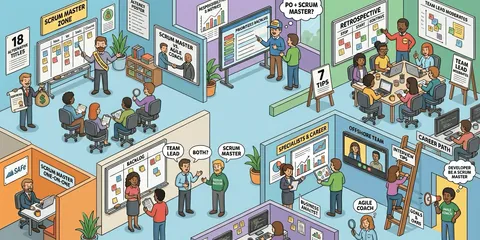
The Spotify model is an agile organizational pattern that enables scaling without cumbersome frameworks. Small, autonomous squads work like mini-startups with a clear mission, deliver end-to-end and choose their own approach (Scrum, Kanban, Hybrid). Lightweight structures ensure alignment without slowing down innovation and pace.
Key elements at a glance
- Squads: 6–12 people, cross-functional, carry a feature or product end-to-end, choose their own process and cadence.
- Tribes: Group 3–5 squads into a topic area (often under 100 people, Dunbar orientation) with a Tribe Lead for coordination.
- Chapters: Professional communities (e.g. backend, UX) across squads; Chapter Lead ensures standards and development.
- Guilds: Voluntary Communities of Practice on interests or technologies; promote exchange and reuse.
- Role support: Product Owner prioritizes value, Agile Coach (or Chapter/Tribe Coach) promotes learning and problem solving.
How squads work
- Autonomy & Ownership: Squads decide on roadmap, tech stack and working methods; mission creates focus and accountability.
- Lean & Experiments: MVPs, A/B tests and data-driven decisions to quickly validate ideas.
- Enabling instead of commands: PO prioritizes; the coach facilitates improvements, removal of impediments and team learning cycles.
Alignment without bureaucracy
- Tribes synchronize neighboring squads via regular demos/syncs, without central control.
- Chapters ensure professional excellence and guidelines (e.g. coding standards, design systems).
- Guilds spread best practices across the entire organization – from tooling to observability to accessibility.
Advantages and typical stumbling blocks
- Pros: High autonomy, faster time-to-market, strong innovation culture, more engagement through ownership.
- Risks: Lack of clarity on missions, tribes that are too large, unclear interfaces between squads or governance through the back door.
- Practical tips: Keep sizes in mind, define clear missions, strengthen chapter roles, promote experiments and make results visible (e.g. with a Spotify Health Check ). For moderation in the workshop format, you can use the Spotify Health Check Retrospective use.
FAQ about the Spotify model
- Is the Spotify model a framework like SAFe? No. It is a flexible pattern that relies on autonomy, lightweight alignment and communities – not a predefined process.
- How big should a squad be? Usually 6–12 people, so that it can make quick decisions but has enough skills for end-to-end delivery.
- When does the model not fit? If strong regulatory requirements, rigid dependencies or a lack of product missions prevent autonomy.
- How do I measure success? In addition to output (delivery frequency, quality), outcomes such as user value and team health count – the Spotify Health Check helps here. For specific questions and templates, you can find the Spotify Health Check Retrospectives .