
How long should a sprint retrospective take? Incl. exceptions

Some Scrum newbies are looking for “How long does a sprint retrospective take” or are interested in the typical length of a retrospective. I’m happy to give you a few numbers!

How Long Sprint Retrospective

Typical length of a Sprint Retrospective

To give you an initial figure: Most of the retrospectives I’ve attended have lasted between 45 and 90 minutes. But that, of course, depends on one thing - how long has it been since you last performed a retrospective? That, in turn, is often related to the length of your sprint.

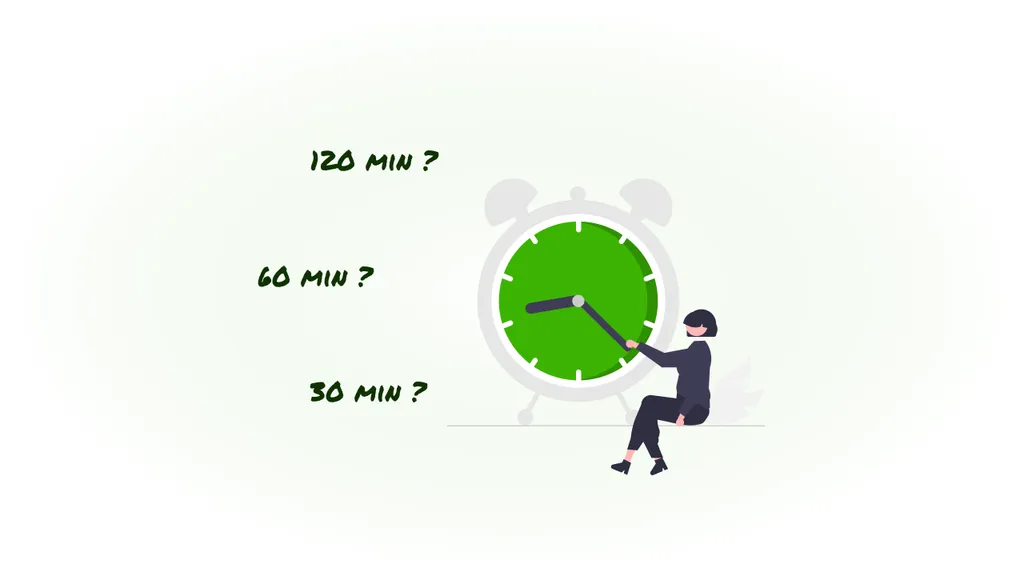
To give you a simple rule of thumb: For every week of sprint, you plan 30 minutes more in your retrospective.

  • Weekly Sprints: Retro takes 30 minutes
  • Bi-Weekly Sprints: Retro takes 60 minutes
  • Monthly Sprints: Retro takes 120 minutes
  • Quarterly sprints: Definitely don’t take 6 hours 😄…

Okay, no the rule of thumb comes to an end, as you might have guessed. Let’s talk about some edge cases.

how long sprint retrospective length

How long are sprint retrospectives in some special cases?

Quarterly Sprints, 12 weeks, are pretty long (they only make sense for specific circumstances, but that is a different topic). According to our rule of thumb, you might think you should do a 6 hour retrospective in these cases. But that would be too much.

How long sprint retrospective: Quarterly retrospectives

Instead, in my experience as a Scrum Master and Psychologist, I recommend to have a maximum of 3 hour retrospectives, plus a 15 break in the middle. Why? 2 things for your background:

  • Firstly, a good retrospective focuses on developing hypotheses for potential small improvements, small steps.
  • Second, a good retrospective does not create a long term change plan with 10 huge action items for the team. Such plans don’t work anyway. Instead, a good retrospective tries to implement 1 to 3 action items.

So, in light of this, why would you need 6 hours? You don’t. 3 hours is more than enough. If you need more time, you should think about performing retrospectives more regularly 🙂 .

By the way - the quality of these action items obviously counts. So our post with 7 tips for great action items might be interesting for you.

How long sprint retrospective: Short retrospectives

In some cases, the team doesn’t have much time. Then you might think: Let’s do a short retrospective! Well, you can do that, but you should keep a few things in mind. We have some tips for you in our post “ Short retrospective - better fast than not at all ” summarized.

By the way, our Retro & Team Health Check Tool can be very helpful in keeping to the timeboxing in a retro - and making the retro more playful and productive overall. Feel free to check it out:

Conclusion - Duration of Sprint Retrospective

I hope you know have a better feeling for how long a sprint retrospective should take. If you have questions about other special retrospectives, we are happy to help!

A big role for the length of a retrospective obviously plays the retrospective format. Given this, our 32 kickass retrospective ideas for beginners and professionals. may also be of interest to you - have fun!

Blog category

More articles on "Tips for retros"

View all articles in this category
7 Best Retrospective Tools for Easy & Fun Retros (2026)

7 Best Retrospective Tools for Easy & Fun Retros (2026)

Discover the 7 best retro tools for easy & fun retros in 2026! Our comprehensive comparison will help you find the ideal retrospective tool for your team.

"What went well" Sprint Retrospective: 27 sample answers

"What went well" Sprint Retrospective: 27 sample answers

What went well Sprint Retrospective: 27 sample answers, concrete formulations and examples from the practice of a psychologist and Scrum Master.

12 Best Ideas for Sprint Retrospectives After 200 Retros

12 Best Ideas for Sprint Retrospectives After 200 Retros

12 proven ideas for Sprint Retrospectives from 200+ retros. With templates, moderation flow, and clear action items for Scrum Masters and Team Leads.

Sprint Retrospective Antipatterns: 10 Mistakes, 10 Fixes

Sprint Retrospective Antipatterns: 10 Mistakes, 10 Fixes

Sprint Retrospective Antipatterns from my practice as a Scrum Master, psychologist, and Echometer co-founder: 10 typical mistakes, 10 concrete fixes plus suitable templates.

How To: Effective Sprint Retrospective Meetings with 5 Tips

How To: Effective Sprint Retrospective Meetings with 5 Tips

As a psychologist and Scrum Master, this is how I facilitate effective Sprint Retrospective meetings with 5 tips, a clear process, Spotify Health Check, and actionable items.

10 Tips for Great Retrospective Action Items incl. Examples

10 Tips for Great Retrospective Action Items incl. Examples

How do I derive good actions from retrospectives? 10 tips and examples to help define and implement meaningful actions. For value-adding retros!

5 phases of a retrospective alone are not enough: the Double Diamond model

5 phases of a retrospective alone are not enough: the Double Diamond model

Optimize your retrospectives with the Double Diamond model! Discover how to improve the 5 phases to achieve better results and teamwork.

42 Fun & Creative Retrospective Icebreakers breaking any Ice

42 Fun & Creative Retrospective Icebreakers breaking any Ice

Discover 42 creative retrospective check-ins and icebreakers for agile teams. Find the best questions and methods to make every retro interactive.

10 Simple & Important Agile Retrospective Ground Rules

10 Simple & Important Agile Retrospective Ground Rules

Agile Retrospectives: 10 Simple Rules for Effective Teamwork. Create a safe environment, encourage honesty, and focus on solutions.

Echometer Newsletter

Don't miss updates on Echometer & get inspiration for agile working

FAQs about Retrospective Tool

Top answers for anyone exploring our Retrospective Tool.

Do I have to register to test the Retro Tool?

No, you do not need to log in to Echometer or register to test the Retro Board and Retro Tool in Echometer.

You can try out Echometer’s Retro Board via the following link without logging in: Try a Practice Round

How can I buy Echometer's retro tool?

First, simply register for free in Echometer. Then navigate to the workspace for which you would like to purchase the retro tool. If you haven’t already done so, you can do so here: Create account in Echometer 1:1 tool

You can then manage your subscription (for both the retro tool and the 1:1 software) within the workspace settings.

You can choose from various payment methods when upgrading.

If you do not have access to your company’s credit card yourself, you can simply add a buyer as a workspace admin in your Echometer workspace so that this admin can carry out the upgrade for you.

What is the difference between the Retrospective tool and the 1:1 software?

In Echometer there are two separate software solutions that are available within each workspace in Echometer:

  • 1:1 tool: Software for planning and conducting 1:1 meetings and tracking employee development
  • Retrospective tool: Software for planning and moderating retrospectives and tracking team development through team health checks

Both are independent software solutions, so they can be used separately from each other.

However, they work according to the same principles and aim to achieve the same added value: The continuous improvement of agile teams. In this respect, the simultaneous use of both software solutions is recommended.

Can I appoint several admins in Echometer?

Yes, you can assign administration rights to any number of users at both team level and workspace level. Please note the following:

  • Only workspace admins can take out and manage a Echometer subscription for a Echometer workspace.
  • Only workspace admins can create additional teams and name or remove additional workspace admins.
  • Team admins can appoint and remove additional team admins and team members for their team
What is the structure of retrospectives in Echometer?

The Echometer Retrospective software is designed to guide teams through the retrospective process with maximum ease and effectiveness, following best practices.

The steps and their sequence can be customized using the navigation within the retro. By default, a retrospective in Echometer is structured in this way:

  • Icebreaker
  • Review of open measures from past retros
  • Collect feedback (first Health Checks, then open questions)
  • Prioritization of feedback
  • Deriving action items
  • Concluding the retrospective with the “ROTI score” (Return on Time Invested)

Additional whiteboards (e.g. for workshops, for analyzing problems or for brainstorming measures) can also be added spontaneously at any point using the Retrospective navigation.

Is there an analysis dashboard to identify trends?

Yes, the Echometer Retrospective software has various detailed dashboards for monitoring the continuous improvement process of your agile team:

  • On the one hand, you can get a quick overview of past team retrospectives in the retro archive.
  • On the other hand, you can use the ROTI score and the Health Check items, which you can use as a regular happiness check, to visualize mood trends in the team based on specific KPIs or agile metrics.
  • There are also other activity trends

Echometer distinguishes between Team Health and Workspace Health in the Health Checks:

  • Results from Team Health are only ever made transparent within the team
  • Results from Workspace Health are made transparent across all teams